

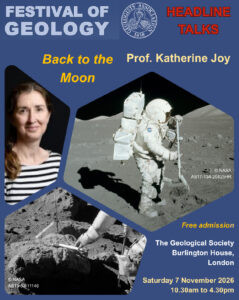
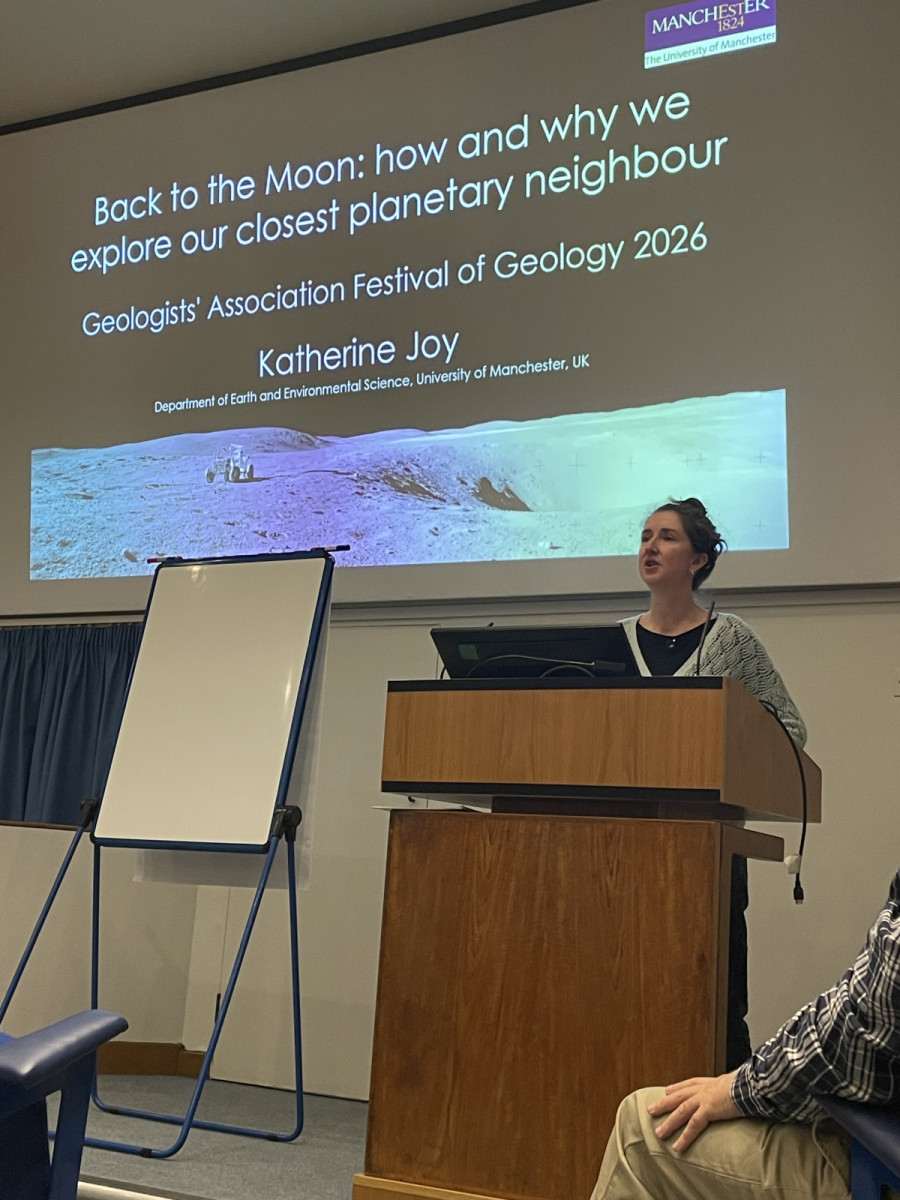
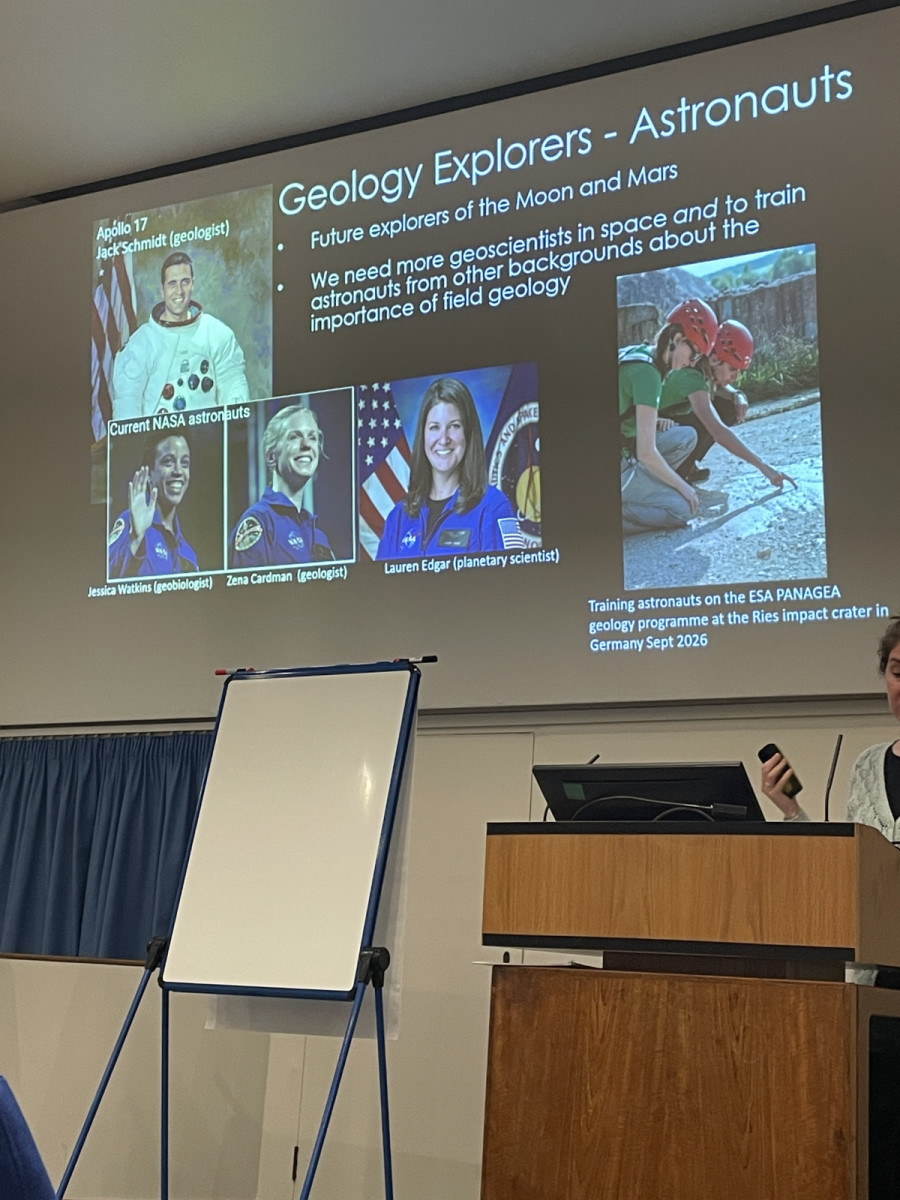
That’s the challenge Professor Katherine Joy left us with when she joined Rockwatch for a special Q&A following her talk at the Festival of Geology in London on Saturday 7 November.
We asked Katherine about her work studying Moon rocks, the discoveries that keep her curious and the questions today’s young geologists could help answer in the future.
Her interview launches Rockwatch asks…, our new weekly YouTube Shorts series featuring conversations with speakers from the festival. Each week, we’ll give another question and answer video its own spotlight, bringing you a little more inspiration from the day.
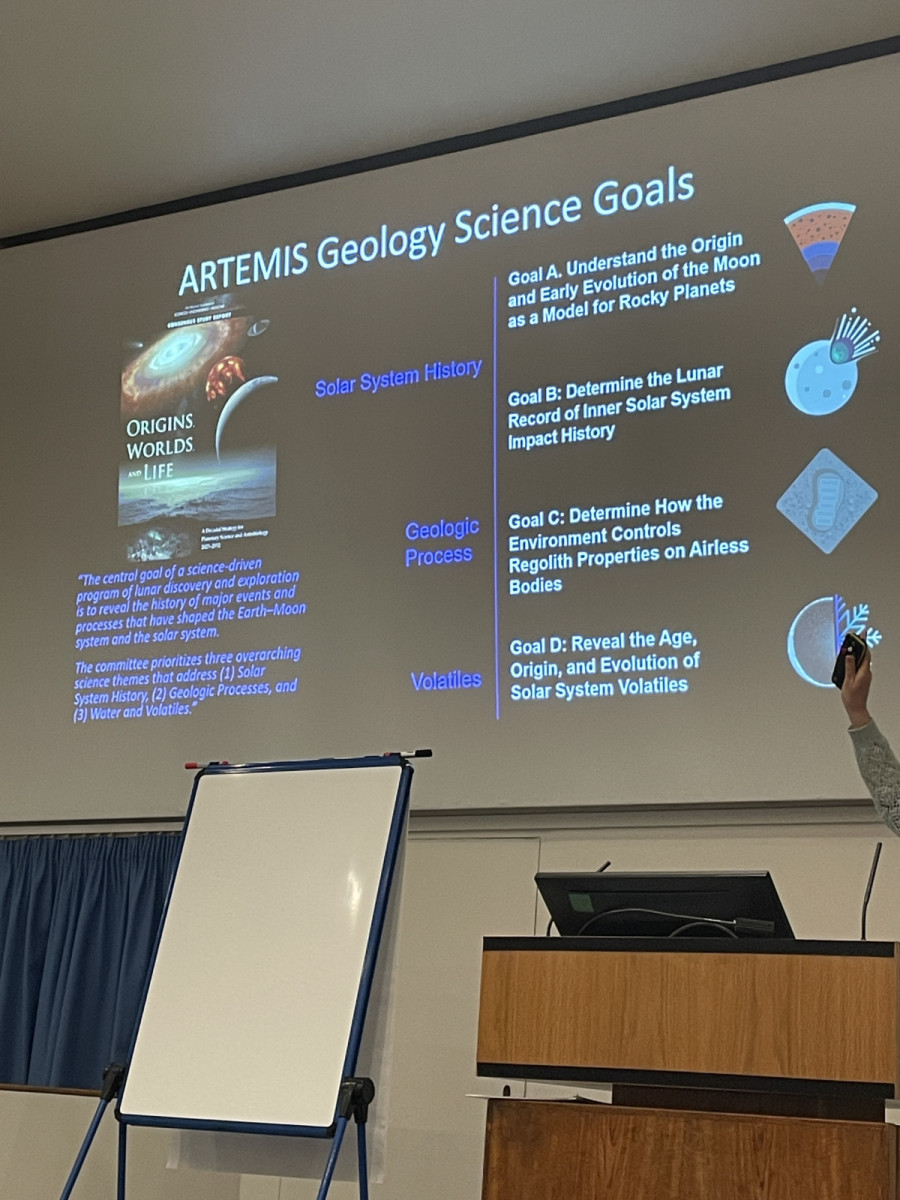
Looking at the Moon to understand Earth
Our first question was about home: what can studying the Moon tell us about Earth?
Katherine explained that the Moon’s ancient surface preserves evidence from the early history of both worlds. Here on Earth, plate tectonics, erosion and other geological processes have changed or destroyed much of that early rock record.
Studying the Moon can therefore help scientists investigate a chapter of Earth’s story that is much harder to explore using Earth’s rocks alone. As Katherine put it, the Moon is “a wonderful archive”.
Small samples, big surprises
Does studying Moon rocks ever become predictable? Katherine’s answer suggests there is little chance of that!
Lunar soil contains fragments of different rocks mixed together. Looking closely can reveal an unfamiliar rock type, an unusual texture or something that prompts a conversation with another scientist.
Many of the samples she described have been shaped by impacts, involving enormous temperatures and pressures. Even for an experienced researcher, there are still strange and puzzling things to investigate.
It’s a lovely reminder for young Rockwatchers: science involves asking questions, sharing ideas and sometimes saying, “Have you ever seen this before?”
Where would she send future astronauts?
Given a free choice of places to collect Moon rocks, Katherine would choose the Aristarchus Plateau.
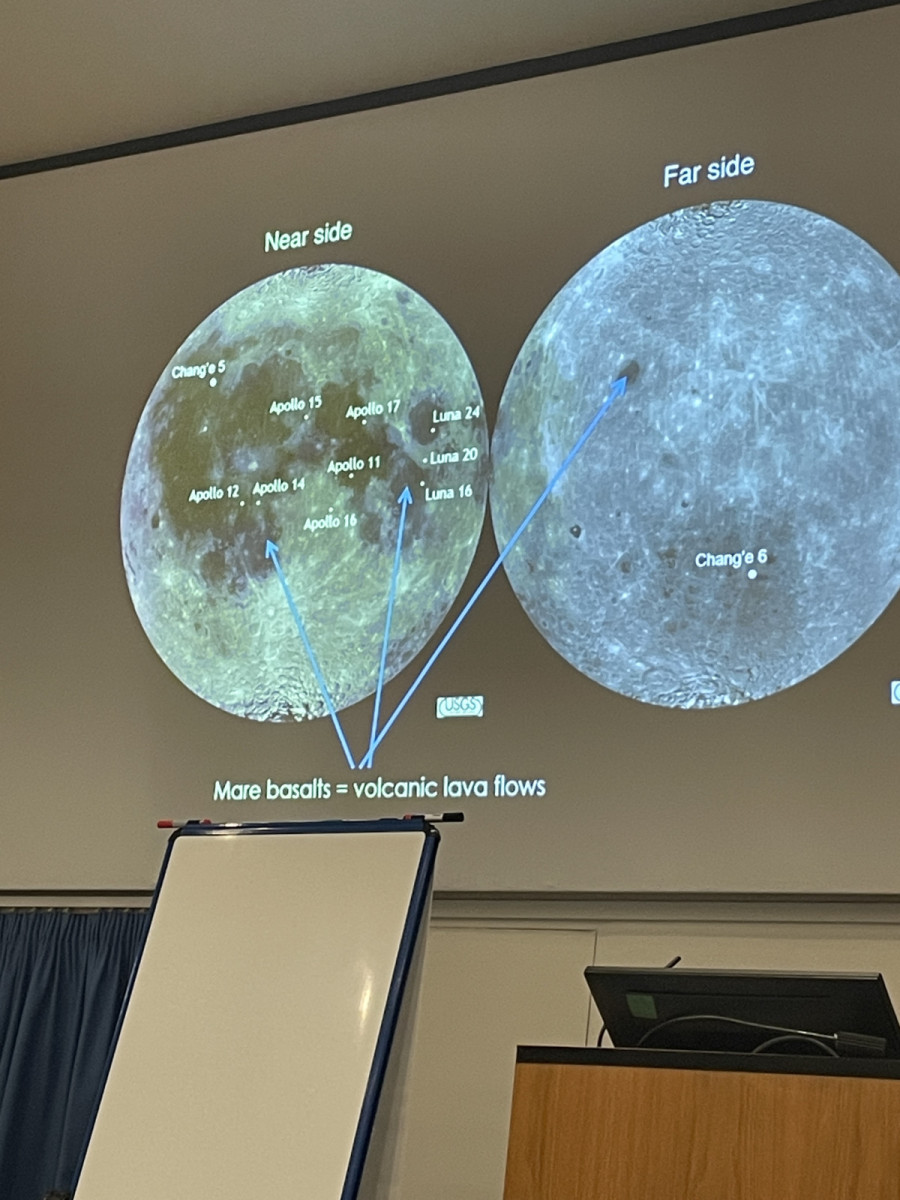
She explained that this region could help reveal more about the Moon’s volcanic past. Rocks collected there could offer valuable clues to volcanic activity billions of years ago.
Just as geologists choose particular places on Earth to investigate particular questions, the location of a Moon rock matters too.
A library book that sparked an interest
Katherine’s interest in space began at school, when she borrowed the autobiography of Helen Sharman, the UK’s first astronaut.
That book inspired her to read more about space and the space shuttle. One borrowed book opened the door to a much bigger interest.
Perhaps Katherine’s own work will now spark that same curiosity in a young Rockwatcher.
Your challenge: how old is the Moon?
To finish, we asked Katherine which question young geologists growing up today could help answer.
Her choice? Working out exactly how old the Moon is.
Katherine explained that answering this question will need more Moon rocks brought back for scientists to study. There is still work to do — and today’s young rock enthusiasts could become part of the generation that does it.
So, Rockwatchers, there’s your challenge for the future! Keep looking closely, asking questions and following your curiosity. You never know where it might take you.
Watch Katherine’s Q&A on YouTube →
Thank you to Katherine for making time to speak with us and sharing such an inspiring challenge.
We’ll release a new Festival of Geology Q&A Short every week. Subscribe to Rockwatch’s YouTube channel to discover what our next speaker has to share.
