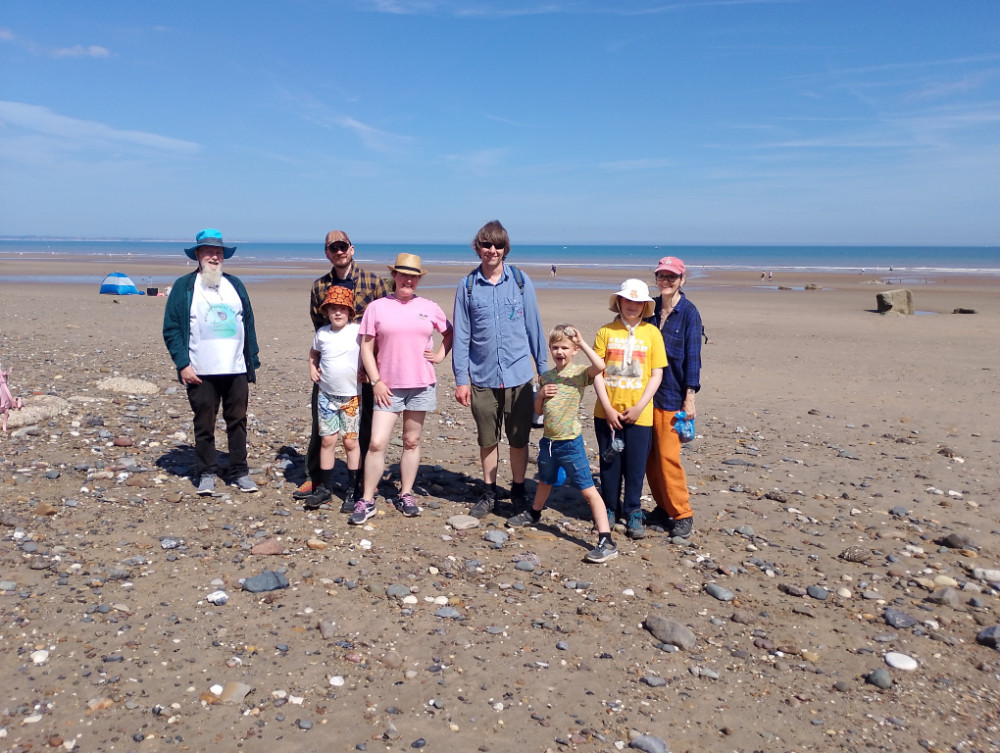
On Friday 14 August 2026, trip leaders Brenda Almond and Mike Horne welcomed three Rockwatch families from Chesterfield, Sheffield and Norwich for a fascinating exploration of the Ice Age Coast at Skipsea Withow Mere in East Yorkshire.
The day began at Mr Moo’s Ice Cream Parlour, where there was time to enjoy an ice cream before setting off. The group followed a footpath through woodland and alongside fields to the cliff top, before descending the low cliff to reach the beach.
Discovering how glaciers shaped Holderness
On the beach, Mike drew a map in the sand to explain the recent geological history of Holderness.
Before the Ice Ages, the coastline followed a line of Chalk cliffs along the eastern edge of the Yorkshire Wolds. During the Ice Ages, enormous glaciers advanced into the area from the north. They carried pieces of rock from the Lake District, northern England, Scotland, Scandinavia and even the bed of the North Sea.
The glaciers deposited vast quantities of Boulder Clay, creating much of the landscape that we now know as Holderness. This material is made up of unconsolidated clay, silt, pebbles and boulders, making the coastline particularly vulnerable to erosion. On average, the cliffs retreat by more than two metres each year, and the coast has receded by around two miles since Roman times.
An ancient lake behind a beaver dam
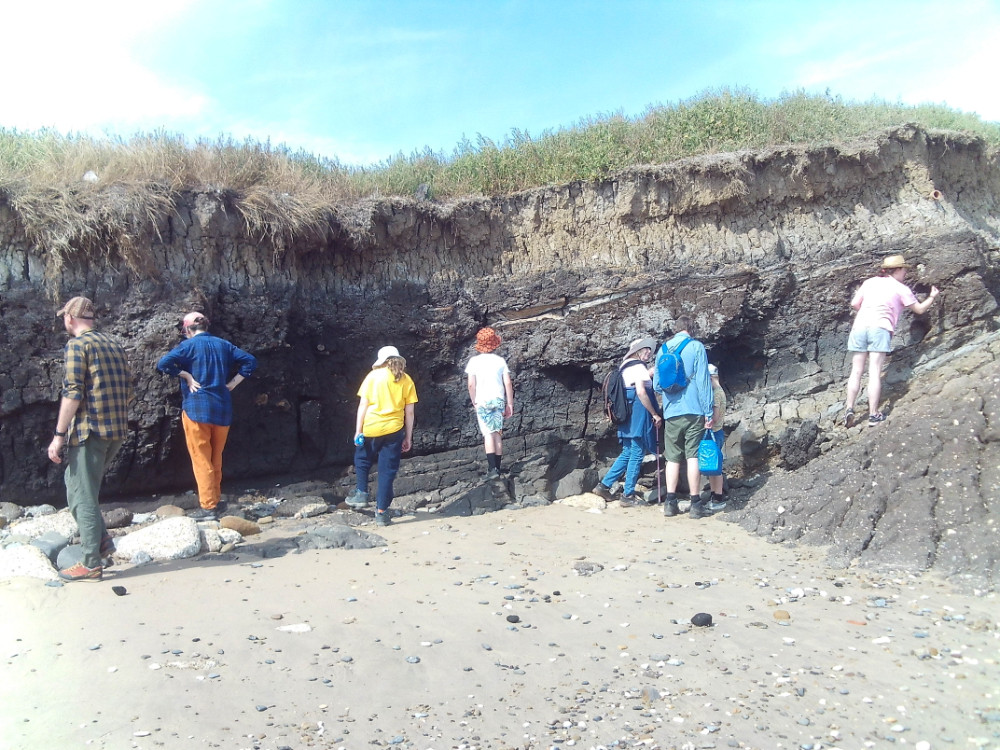
At Skipsea Withow Mere, the group examined a remarkable cross-section through the deposits of an ancient freshwater lake. The lake is thought to have formed behind a beaver dam in a depression within the Boulder Clay.
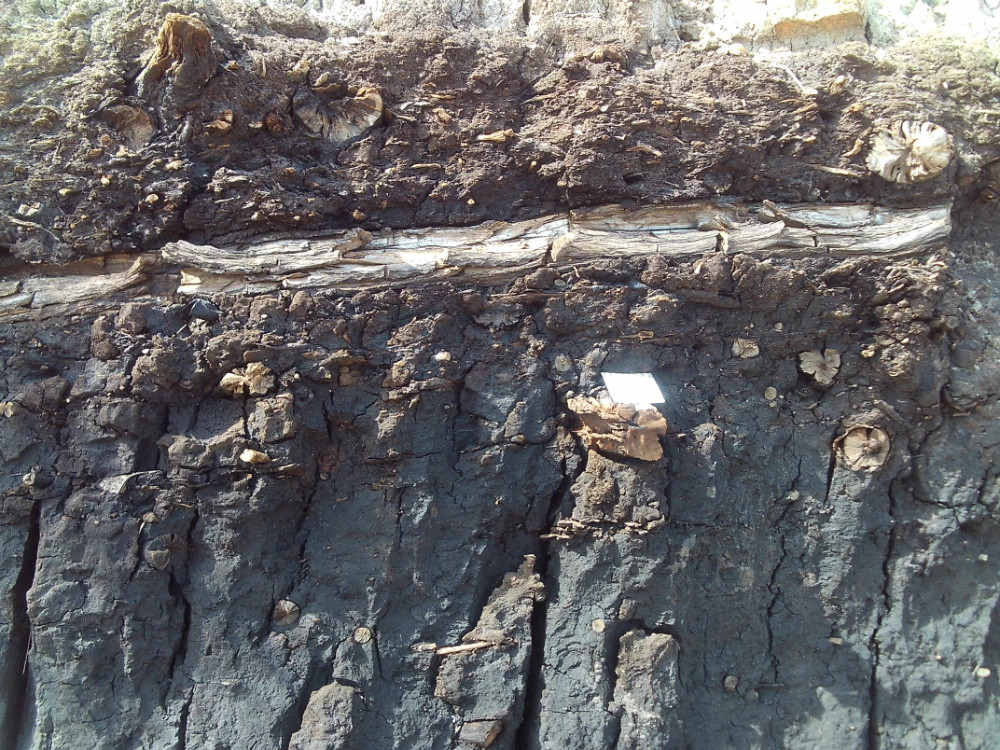
In places, gravel lies at the base of the lake deposits, followed by blue-grey clay containing abundant freshwater ostracods and gastropods. Ostracods are tiny crustaceans with hard shells, while gastropods include animals such as snails.
Above the clay is a thick layer of peat, which becomes coarser towards the top and contains some large tree branches. Rockwatch members made an exciting discovery in the peat: hazelnuts that could be 6,000 years old or more!
Modern soil caps the deposits, and field drainage pipes can also be seen in places.
Rocks transported by ice
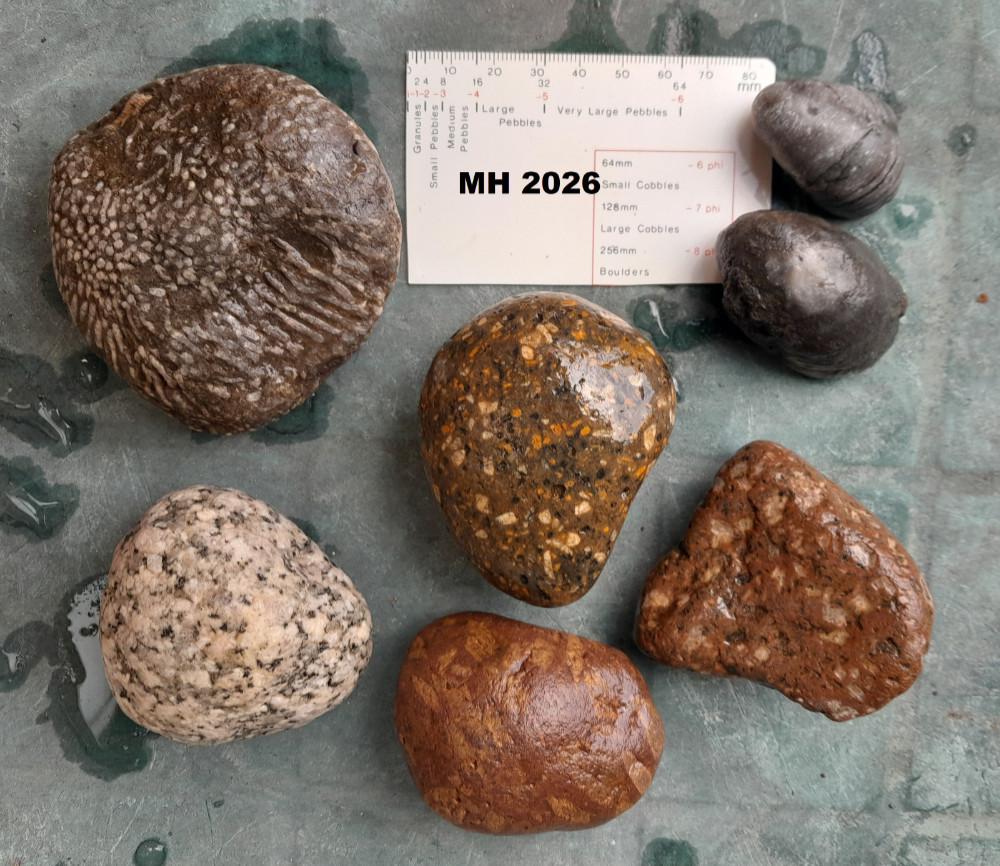
The group then searched the beach for glacial erratics that had been washed out of the Boulder Clay cliffs. Glacial erratics are pieces of rock carried by glaciers and deposited far from the places where they originally formed.
Skipsea is the type section for the Skipsea Till, the middle of three Boulder Clay deposits of Devensian age found in Holderness.
An impressive variety of rocks and fossils was discovered, including:
- Brockram from Cumbria
- Porphyries from Norway and the Cheviot Hills
- The Jurassic oyster Gryphaea
- Cretaceous belemnites
- Corals preserved in Carboniferous Limestone from the North Pennines
- Black flint transported from the bed of the North Sea
Mike explained that flints found in the Chalk exposed in Yorkshire are usually pale grey and tend to shatter unpredictably when broken. The black flints found on the beach came from younger Chalk and must have been picked up by glaciers as they crossed the North Seabed.
The group also found some exquisitely preserved fragments of tiny crinoid stems. It is amazing to think that these delicate fossils survived a journey inside a glacier carrying enormous boulders, some of which still display the scratches and scars created as the rocks rubbed against one another.
The trip offered a wonderful opportunity to read the story of the Ice Ages directly from the cliffs and beach. From ancient lake deposits and 6,000-year-old hazelnuts to fossils and rocks transported over great distances, every discovery helped reveal how glaciers created and continue to influence the Holderness landscape.
Thank you to Brenda Almond and Mike Horne for leading such an informative and enjoyable day, and to all the Rockwatch families who joined us.
Further reading
- T. Marsters, “Skipsea Withow Mere”, Humberside Geologist, 15 (2011)
- Mike Horne, Welcome to the Ice Age Coast