
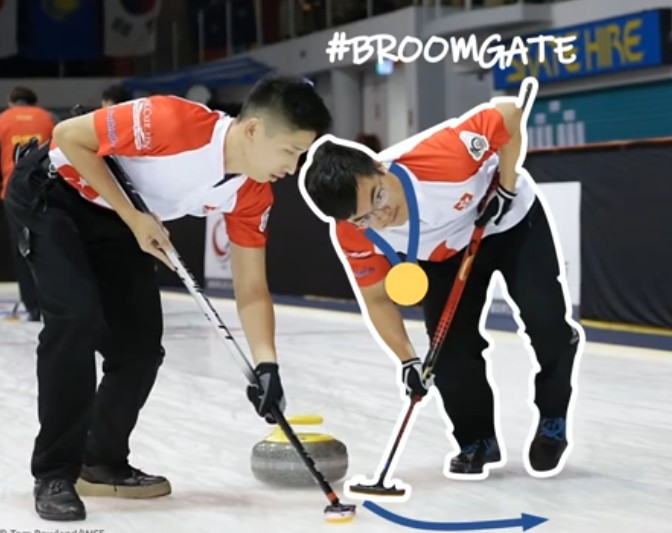
Derek Leung curling (c) Tom Rowland WCF
With the Winter Olympics in full swing, there’s one sport that makes geologists lean forward in their seats — Curling! Why? Because the real MVP might just be the rock itself.
What Is Curling?
Curling is played by two teams of four. Players take turns sliding eight stones down an ice sheet towards a circular target called the house. Points are scored for the stones that finish closest to the centre.
But here’s the twist: those stones aren’t just any rocks. They’re made from a very special granite-like material with an incredible geological story.
The Two Tiny Places That Supply the Olympic Stones
Believe it or not, Olympic curling stones come from just two places on Earth — and both are in the UK:
- The island of Ailsa Craig, off Scotland’s Ayrshire coast
- A quarry in Trefor, on the North Wales Peninsula
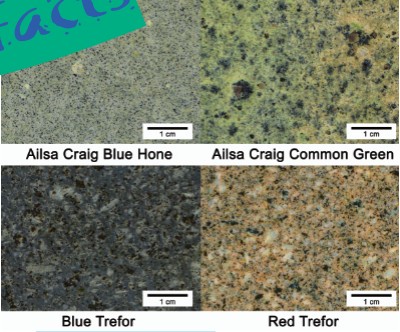
The four types of curling stones (c) Derek Leung
From these locations, four famous curling stone types are produced:
- Ailsa Craig Blue Hone
- Ailsa Craig Common Green
- Blue Trefor
- Red Trefor
How cool is that? Two small geological hotspots supply stones to the entire Olympic world!
Granite… But Not Quite?
Curling stones are made of three main minerals:
- Quartz
- Alkali feldspar
- Plagioclase feldspar
That sounds like granite — and they certainly look like granite — but here’s the geological twist:
👉 Most curling stones don’t strictly meet the classification rules to be called true granite!
They’re “granite-like,” but mineral proportions matter in rock classification. That’s real-world petrology in action!
Built for Impact
Curling stone rock is famous for being among the hardest and purest of its kind in the world. That’s essential because:
- The ice surface is wet
- Stones collide at speed
- They must resist cracking or chipping
When stones hit each other, tiny fractures and elastic vibrations occur. The physics of these impacts affects how the stones move — and understanding that science can actually help athletes improve their game!
Meet the Scientist Behind the Stone
One person exploring this icy intersection of sport and geology is Derek Leung, a PhD mineralogist at the University of Edinburgh — and a curling athlete himself.
Derek describes himself as:
Artist by nature, scientist by nurture.
He previously wrote a fascinating article for Rockwatch Magazine about curling stone mineralogy and physics. He also shares insights, high-speed impact footage, and research updates on his website and YouTube channel.
🔎 Explore more:
- Derek’s website
- High-speed curling stone impact video
- Olympic geology article by Virgílio Franceschi Neto & Sean McAlister
Geology in Action
Next time you watch a curling match at the Winter Olympics, remember:
You’re not just watching a sport.
You’re watching volcanic history, mineral chemistry, rock physics, and precision engineering glide across the ice.
We’re wishing all Team GB curlers the very best of luck — and cheering on the rocks just as loudly!
