
Meet the Team
Meet the Rockwatch Management Team – a group of diverse, professionally qualified geologists and other experienced amateurs.
Seabury Salmon and Helen Connolly, although not on the Rockwatch Management Committee, are essential members of our wider Team. Their professional skills and advice as magazine publisher and website manager, are essential to the success of Rockwatch.
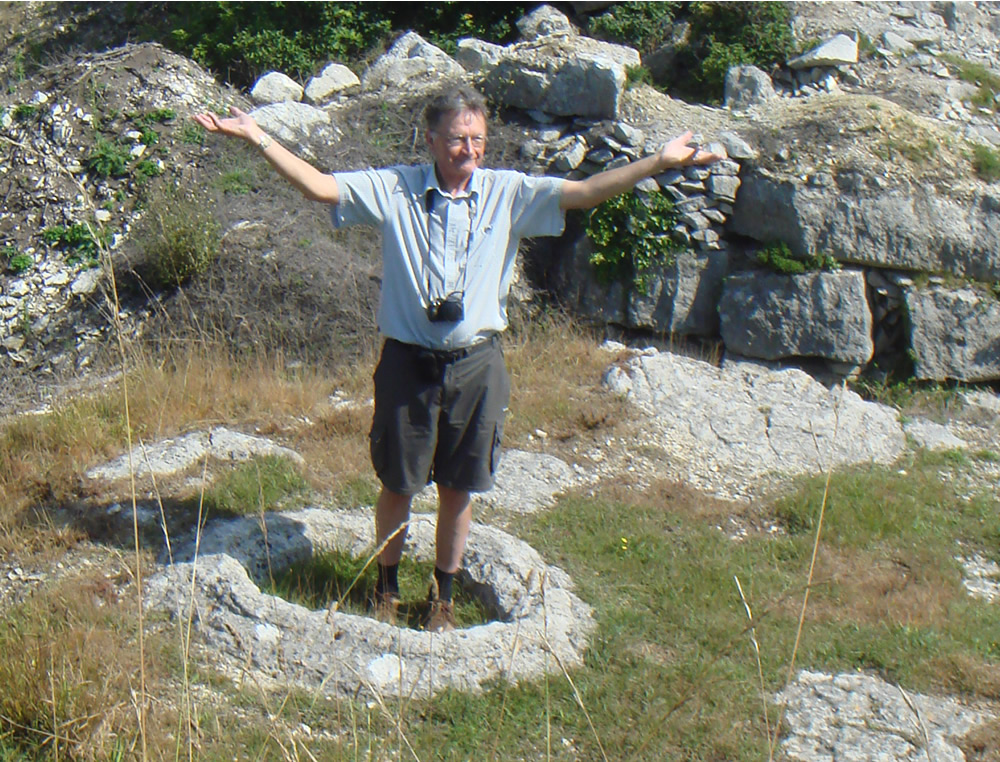
Alan Holiday – Rockwatch Management Committee
I graduated with a degree in geology and geography, trained to be a teacher and spent thirty seven years as a teacher of geography and geology in the Weymouth area. I also had a year in the oil industry as a mud logger. More recently I have been chairman of the Dorset Geologists’ Association Group and Dorset’s Important Geological Sites group (geological conservation).
In my ‘spare time’ I lead field trips for interested parties in Dorset and further afield and always enjoy being one of the leaders at the Annual Rockwatch Residential Fieldtrip to Dorset – sharing my passion for geology with young Rockwatchers and their parents.
And my favourite fossil? Probably trilobites, and my favourite piece of rock is in this photograph. It’s Wenlock Limestone with a trilobite pygidium collected at Ironbridge about 45 years ago!
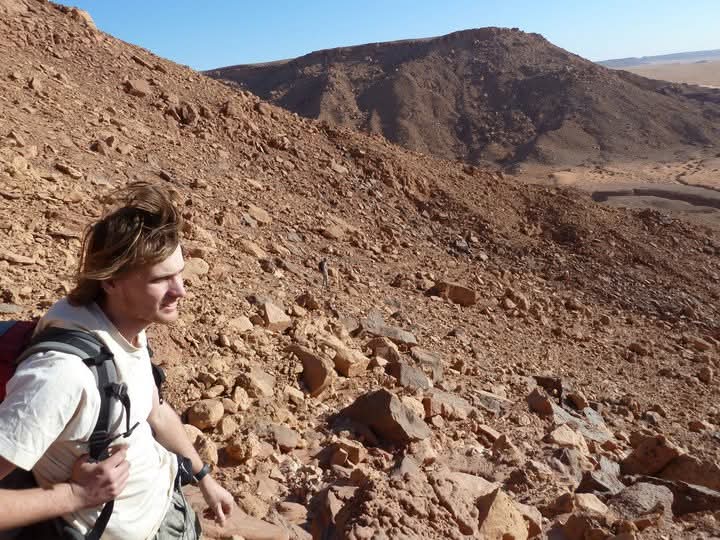
Alex Ayling, Science Teacher and Rockwatch Field Trip Manager
I have been fascinated by rocks, fossils and natural history for as long as I can remember, so discovering Rockwatch was very exciting for me. I really enjoyed the many Rockwatch events, ; especially the field trips which I found gave me a big head start when it came to university fieldwork.
I studied Palaeobiology and Evolution at Portsmouth University. I experienced some excellent field trips including one to Spain and another to the Laggerstatte of Germany. At Rockwatch events and at university I met some great people, and it was excellent to be around people with similar interests.
After university some fellow students and I planned a trip to go dinosaur fossil hunting in the Sahara; however after asking talking to our lecturer Prof. Martill for advice, he decided to come with us, so it became an official University expedition. I bought an old Landrover Defender and prepared it for a grueling trip into the desert. We drove 5000 miles to Morocco’s border with Algeria for a month of dinosaur hunting.
On returning from our expedition I started working on a project on Silurian Biostratigraphy, in the hopes that it would lead to funding for a PhD, unfortunately the financial climate changed and funding wasn’t available. I attempted to continue the project whilst working full time, however after a few years of working very long hours and studying around my job, I made the tough decision to discontinue the project
I am now working as a Science teacher, using many of my geological skills and experiences to inspire and encourage people into enjoying science.
I haven’t given up on my palaeontological career and I hope that the long summer holidays that come with being a teacher will allow me to pick up other geological projects, trips and expeditions as well as become more involved in Rockwatch trips and events. I still have my Landrover ready and waiting for the next big geological adventure.
Alex Ayling
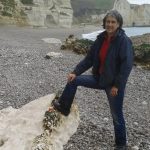
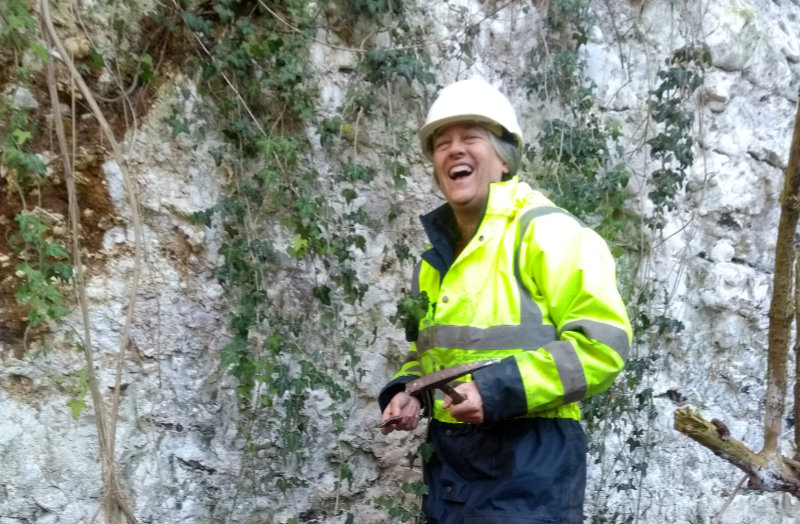
Clare Byrne Exploring a local chalk pit with The Hertfordshire Geological Society.
We’re delighted that Clare Byrne became Rockwatch Chair in January 2023. Professionally Clare trained as a physicist, teaching GCSE and A Level Physics until her recent retirement. In the meantime she also learnt rather a lot of geology which she enjoyed, so now is happy to put that knowledge into practice.
Having joined Rockwatch on a residential field trip more than 20 years ago, Clare became hooked on geology and attended the annual residential field trip for the following 10 years with her family thereafter. Over the years, Clare has helped out at numerous Rockwatch events and has been considered a friend and ‘one of the team’ long before becoming Chair.
In a message about forthcoming field trips to members Clare recently said,
“I am really looking forward to meeting Rockwatchers who have been starved of fossils over the last couple of years and whose enthusiasm will no doubt be even more evident than usual in 2023.”
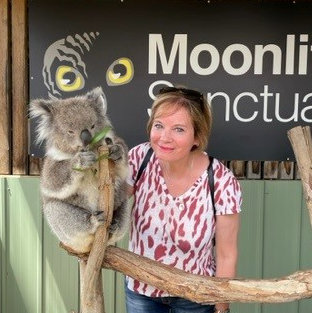
Helen Connolly, Rockwatch Website Manager
I became involved in editing the Rockwatch website more than 15 years ago through a friend who works at the Geologists’ Association.
Although I’m not a geologist, over the years I’ve fallen in love with Rockwatch and the amazing team that runs the Club and happily I have a much better understanding and appreciation of our world as a result.
It’s always a delight to see the enthusiasm and love of geology in the children and young people who are members of Rockwatch. Their passion shows no bounds and this is very infectious! I admire the team of geologists greatly who dedicate their time to nurturing this passion and interest in young people. I think they’re all amazing human beings, willingly devoting their time and sharing their expertise with the next generation of geologists. Rockwatch is a brilliant club to join and be involved with and I’m very proud to play a small part in it.
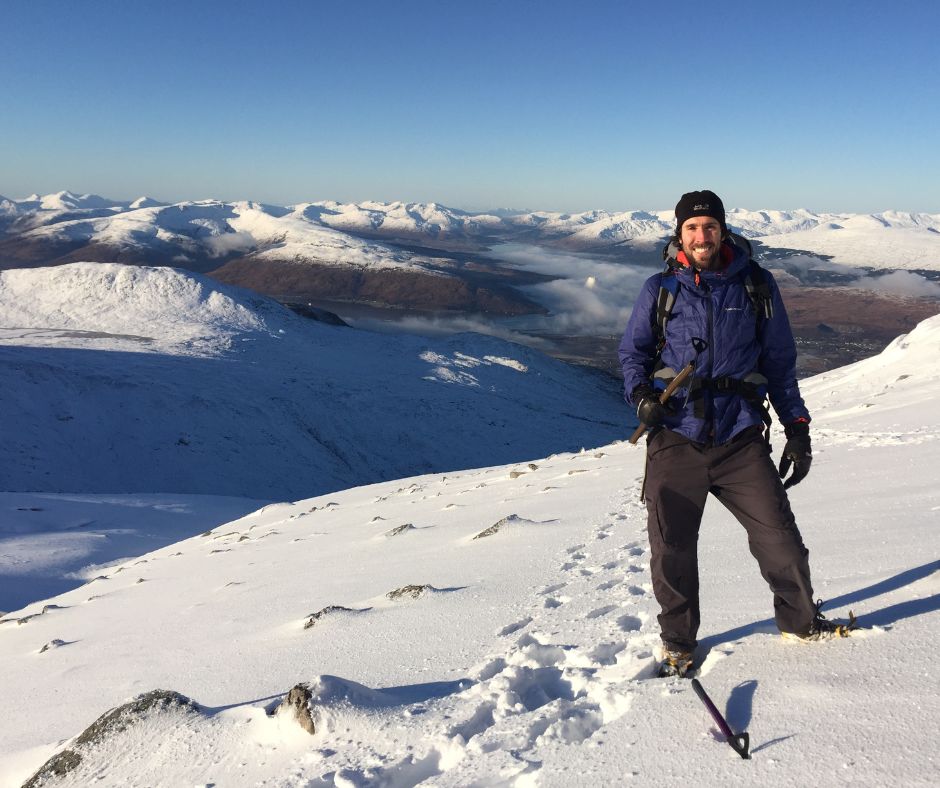
James Barnet, Science Editor for Rockwatch Magazine climbing Carn Mor Dearg, the 9th highest mountain in Scotland and the neighbour to Ben Nevis (near Fort William)
I was absolutely delighted when Peter approached me with the opportunity to become a science editor for Rockwatch magazine in October 2024. I am a former member of Rockwatch from over 20 years ago and the club has played a huge role in the subsequent development of my career as a geologist. I still remember the excitement I would feel every time the latest issue of Rockwatch magazine dropped onto my doormat. The broad range of geological topics, beautifully illustrated by stunning photographs, would often inspire me to undertake a geological project or field trip during my school holidays.
My interest in geology, and particularly fossils, was sparked by my early childhood years in the New Forest, Hampshire (southern England). I learned from a neighbour about a small river in the forest, where I could find beautiful fossil sea shells and even occasionally shark teeth! I was fascinated by how such fossils of sea creatures could be found in a river bed that is now 75 metres above sea level and over 15 miles from the nearest coastline. I learned that these fossils were actually Eocene in age (around 44 million years old) and were deposited when a shallow subtropical sea covered the area where I lived. From that point on, I was hooked!
I was already a member of Southampton Mineral and Fossil Society with my dad and learned about Rockwatch from a leaflet at one of their monthly meetings. I quickly signed up at the age of 11 and then a few years later entered their national competition (known then as the Rockhound Competition) and in later years, entered the Rockwatch Rock Writer competition. These competitions presented a fantastic opportunity to develop my geological skills and learn more about the subject. I was a competition winner on two occasions and received some fantastic fossil specimens for my prizes, which still hold pride of place in my collection. The prize-giving ceremony in London was held at the prestigious London HQ of Anglo American, who sponsored the annual competition.
The Rockwatch Magazine is also an excellent source of interesting articles and some, along with the fact cards, even helped with revision for my A-level Geology and Geography courses! I have also contributed several articles to Rockwatch magazine over the years and look forward to contributing more regularly in my new role as science editor alongside Peter from the start of 2025.
My membership of Rockwatch and the Southampton Society, along with the geology and geography I studied at school, all led to my decision to study a Master’s degree in Geology at the University of Southampton. I graduated with a First Class Degree in 2008 and found a job immediately as a geologist for an oil and gas consultancy in Oxfordshire from September 2008 – September 2014. I mentioned my membership and association with Rockwatch during my job interview and the management had heard of the club. This evidence of extra-curricular interest in the subject may also have helped with the job offer I received! Working as a geologist during those 6 years enabled me to travel to many different and exciting countries to do fieldwork, including Norway, Russia, France, Turkey, Oman, Canada and the USA. I have also presented posters and papers at a number of international geoscience conferences.
After 2 years of hard work, I finally published my first book in August 2014, a geologically-themed walking guide to the mountains around Fort William in Scotland (Rockwatch even got a mention in the “About Me” section!). This was followed almost 7 years later by the publication of my second book in January 2021, a guide to the geology and fossils of the New Forest, the beautiful area which initially sparked my interest in geology and fossils as a child.
In September 2014 I returned to academia to study for a PhD in Geology at the University of Exeter, based at its Cornwall Campus near Falmouth. My research focussed on reconstructing past “greenhouse” climates during the Paleocene epoch (~66–55 million years ago), using the tiny calcite shells of marine microplankton called foraminifera. These were obtained from deep-sea sediment cores drilled in the South Atlantic and Indian oceans. Foraminifera shells are no bigger than the fine grains of sand you find at the beach and can only be identified with the aid of a powerful microscope. This work can aid predictions of our future climate over the next few hundred years with ongoing human-induced climate change.
I completed my PhD in 2018 and then moved north to start a post-doctoral research position at the University of St Andrews (Scotland) in November 2019. This subsequently turned into a lectureship position from April 2021, which I am still in today. My research at St Andrews is still focussed on reconstructing climates using foraminifera shells during hot “greenhouse” episodes in the geological past, with a particular focus on the Late Cretaceous, Paleocene and Eocene (67 to 34 million years ago). I still regularly write and publish articles, both within academic peer-reviewed journals as well as journals accessible to a wider audience such as Geology Today.
I have come a long away and achieved a lot since I first joined Rockwatch, but I think it’s important to recognise that Rockwatch gave me the opportunities for this success, including the opportunity to practise and refine my creative writing skills through entries to the Rock Writer competition, along with the geological knowledge I acquired through the club’s magazine, fact cards and field trips. In my new role as science editor, I can’t wait to contribute to the magazine and club which formed the building blocks for my successful career as a geologist. This position will perfectly combine two of my passions – geology and writing – and I hope to inspire the current Rockwatch membership in the same way as I was inspired by Rockwatch as a young child. I’m sure some of you will follow in my footsteps and become the geologists of the future!
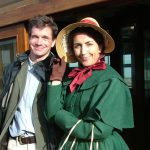
Jonathan Larwood – Rockwatch Management Committee
I could say I have geology in my blood; my father was a geologist and I have followed in his footsteps.
I studied geology in London, followed by Aberystwyth, which provided a world of geological contrast from the building stone trails, museums, and Crystal Palace dinosaurs of the city to the dramatic Palaeozoic cliffs and mountains of mid Wales.
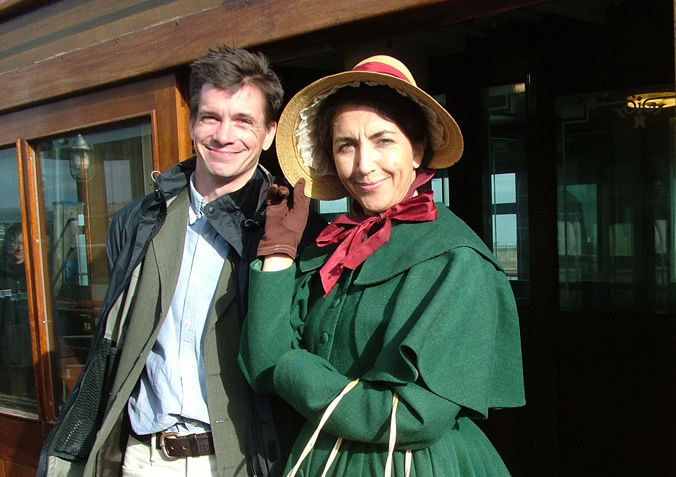
I am a palaeontologist working with Natural England, a government organisation responsible for conserving some of England’s most important geology. That’s when I met Mary Anning (see picture) when we celebrated the establishment of the Jurassic Coast World Heritage Site.
Kate Adler, Rockwatch Administrator
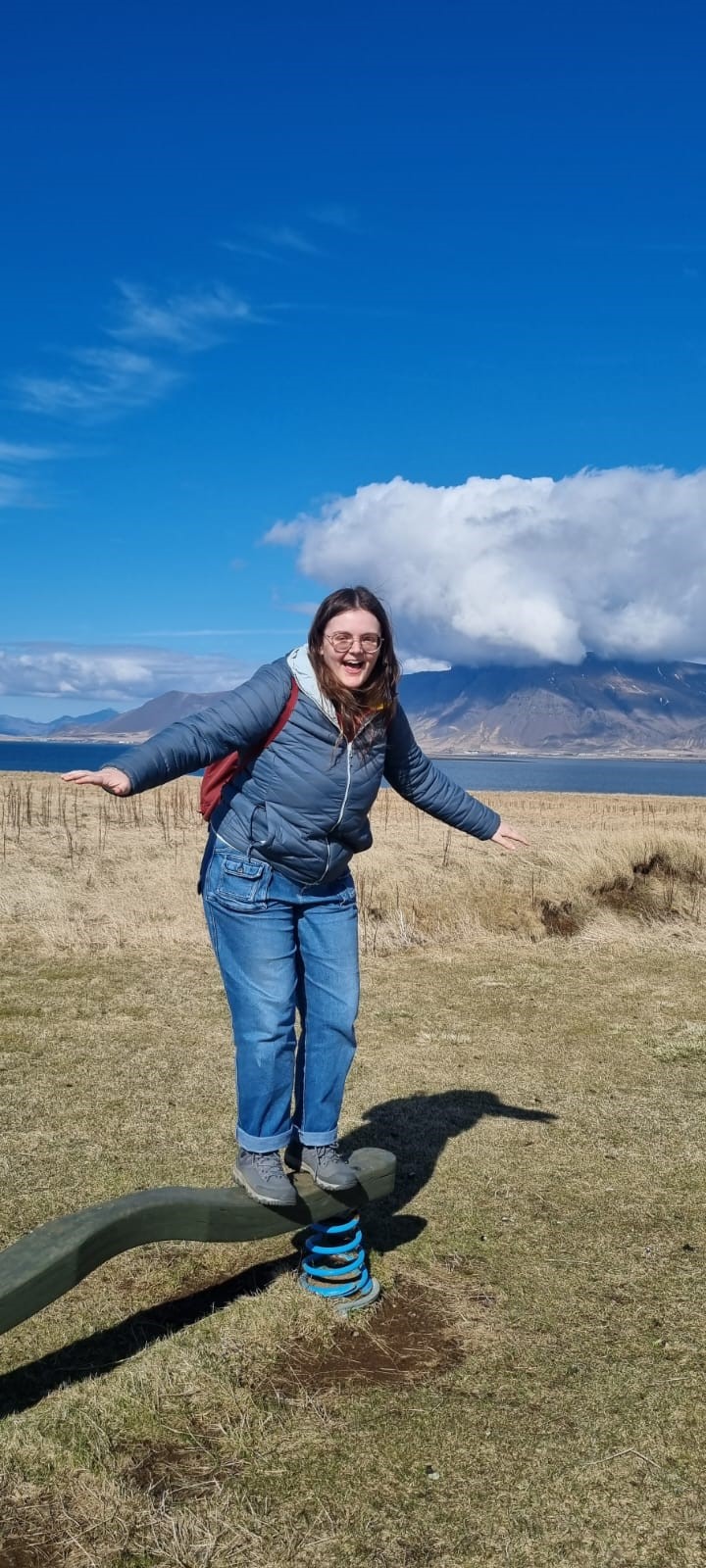
I first encountered Rockwatch when I was 8 on the yearly fieldtrip and went back to Leeson House for years after. I loved heading out and chiselling away to find hidden codes in the rock of ancient life and evidence of long past geological events in the cliff sides.
I went on to study Philosophy at the University of East Anglia and became involved in student organisations and have returned to Rockwatch now to get involved in the running of a club I loved as a child.
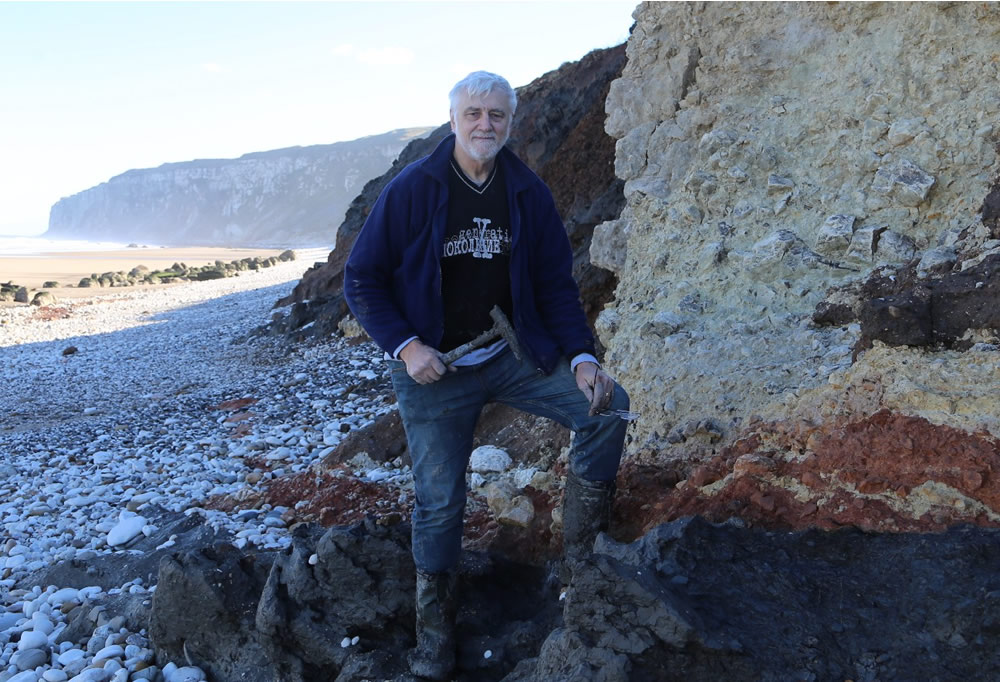
Michael Oates – Rockwatch Management Committee
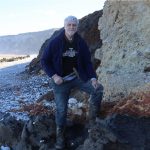
I have been a rock and fossil enthusiast since primary school and followed this calling via batchelor and doctorate degrees in Geology from London University.
Employment as a geologist in the petroleum industry naturally followed as a new graduate and I thoroughly enjoyed this career, when no two days were alike and which enabled me to visit lots of unusual places worldwide, at someone else’s expense.
In 2015 I became semi-retired, whereupon I established myself in a new house with huge museum potential and now spend most of my time sorting out my collection – some of which has not seen the light of day for 40 years or more! I also arrange the Geologists’ Association lecture programme each year, and have been involved with Rockwatch almost from the start – organising the occasional field excursion, and attending events to help out whenever possible.
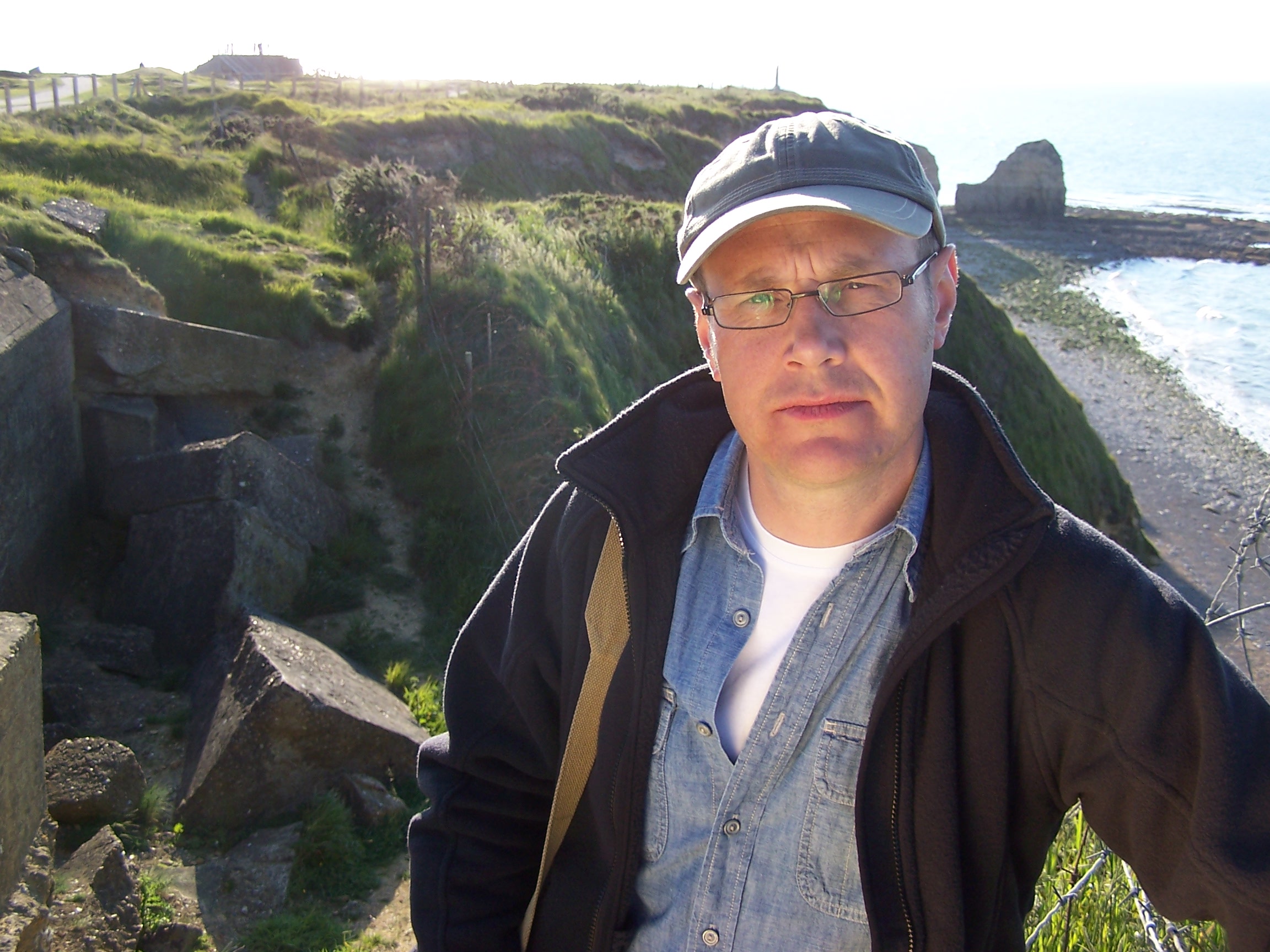
Peter Doyle – Rockwatch Management Committee
I started out collecting fossils in North Wales as a boy. With time my collection grew and so did my interest, and I was lucky enough to study geology at university before eventually going on to teach geology at university.
Seabury Salmon – Magazine Publisher
I spent years writing about nature conservation and wildlife and reporting on environmental projects in towns and cities.
While researching an article about The Lizard peninsula, Cornwall, I found the varied wildlife there was directly related to the soil and rock types of this small area. Ever since, I have seen geology as the most important influence on, not just our plants and animals, but also on where and how we live.
I have also edited and produced a geological conservation publication, Earth Heritage, and became involved with Rockwatch magazine over 10 years ago. The geology bug bit deep, because my daughter Kate has gained a degree in the subject from Durham.
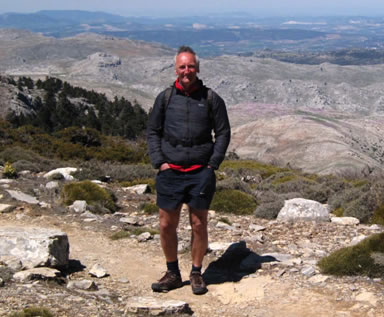
Photo shows Seabury enjoying the limestone and igneous ranges of the Sierra de las Nieves in southern Spain.
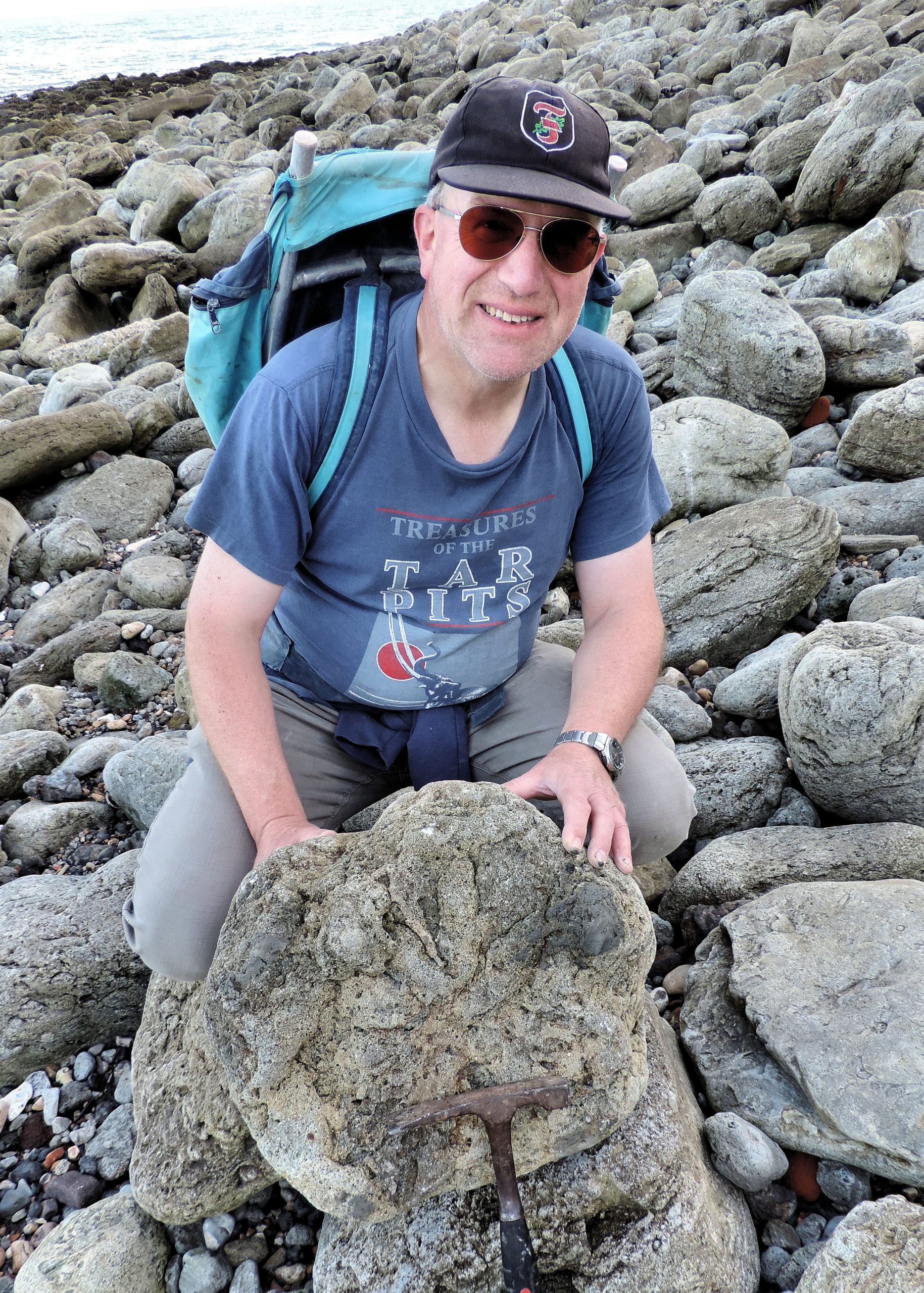
Steve Friedrich with a dinosaur footprint in Folkestone, Kent.
Steve Friedrich is a field researcher, Cross Channel Geopark ambassador, and visual storyteller whose discoveries along the Folkestone coast have reshaped our understanding of Britain’s Cretaceous past.
His work has expanded the known extent of the Folkestone dinosaur tracksite, revealing new footprints, trackways, and rare evidence of predator–prey interactions.
Through meticulous fieldwork and collaborative research, Steve has helped illuminate the behaviours and environments of the dinosaurs that once roamed the Greensand shores.
As a Rockwatch Field Trip Manager, he shares this excitement with young fossil hunters, turning each new find into an opportunity for learning, imagination, and scientific discovery.
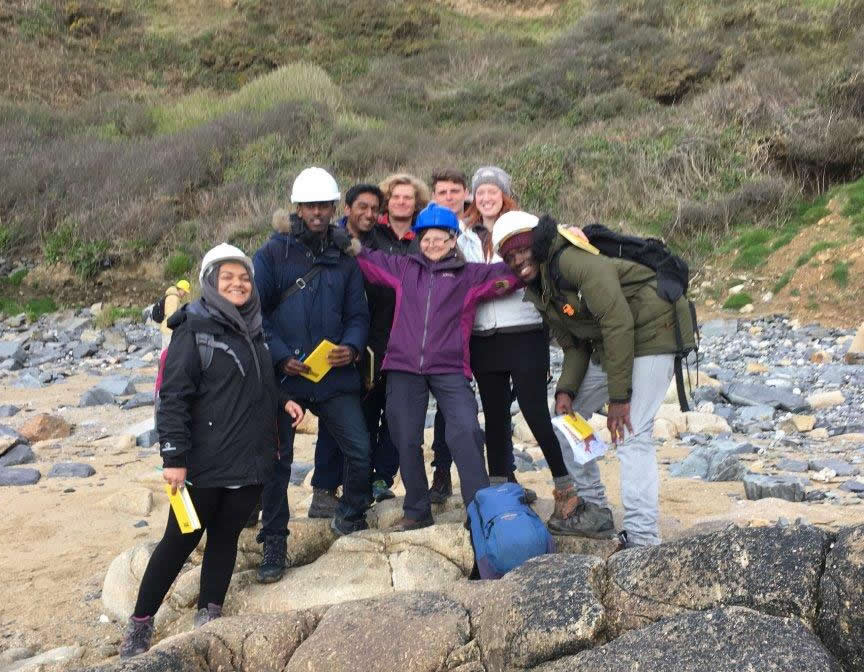
Wendy Kirk – Rockwatch Management Committee
I have worked in the Earth Sciences Department (formerly the Geology Department) at University College London since 1976. Originally I worked as Curator of the many thousands of specimens of rocks, minerals and fossils in the Geology collections, and spent a number of years teaching in the classroom and in the field, collecting a PhD on the way.
I have co-authored the Field Guide to Rocks and Minerals of the World, published by Kingfisher/Larousse, and worked from time to time with Dorling Kindersley, Thunder Bay Press, and Scholastic. More recent interests have included the geology of gravestones.
In my spare time, apart from geologising, I play accordion for a folk/ceilidh band, and saxophone for the Camden Light Orchestra along with a bit of tap dancing!